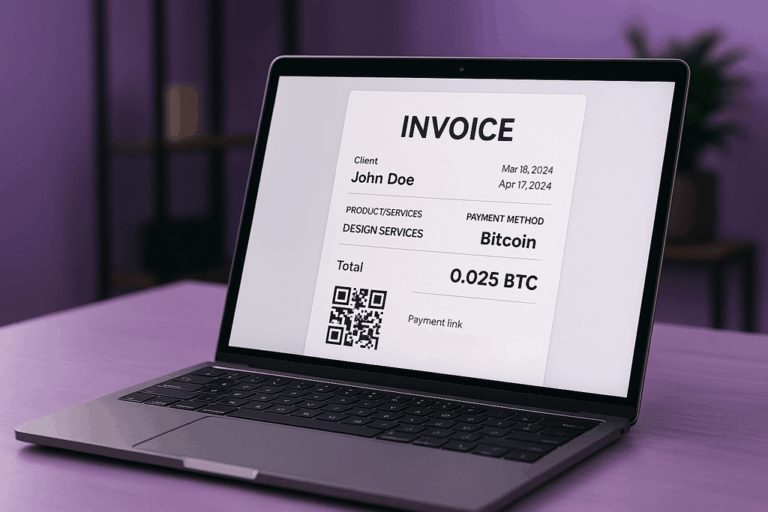
Crypto Invoicing: Generate Bitcoin & Blockchain Invoices
Learn how crypto invoicing works and how to generate Bitcoin or stablecoin payment requests for clients worldwide. Faster settlement, lower fees, and…
Polina Yan
Learn how crypto invoicing works and how to generate Bitcoin or stablecoin payment requests for clients worldwide. Faster settlement, lower fees, and…
A practical guide to integrating a crypto payment API into real products. Learn how developers handle payments, security, and scaling, and when…
Crypto subscriptions let businesses accept recurring payments through wallets instead of cards. Learn how crypto subscription models work, their use cases, risks,…
Learn how to set, refresh, honor, and close crypto payment quotes with a state machine that prevents stale pricing, misapplied funds, and…
Learn how crypto finality changes chargebacks and build a fair policy for fraud, non-delivery, duplicate payments, refunds, and escalation decisions.
Learn how to replace manual crypto invoices with controlled billing, clean reconciliation, safe cutover rules, and recurring wallet collections.
Subscriptions and one-time payments, settled to your own wallet. Free until the end of 2026.