
Quick answer
If the billing model can interrupt product access before finance notices, the problem is operational, not pricing. Metered billing software is safest when usage must be measured exactly and explained cleanly; prepaid credits are safer when buyers need budget certainty; recurring allowances are safer when access has to feel stable and resets matter more than wallet-style depletion. The real test is not “which model is more modern,” but which one creates fewer disputes, fewer surprise outages, and fewer support escalations when a card fails or a balance runs out.
Most pages about Metered Billing Software stop at the definition: charge by use, track events, invoice later, and give customers a dashboard. That is not the hard part. The hard part is what happens when usage keeps flowing after a card fails, when a top-up never clears, or when the customer says the bill is wrong because the wrong tenant, token, or time zone got counted.
For a broader reference point, see Stripe’s usage-based billing overview and Cryptocurrency.
This comparison is for SaaS and AI products where billing is part of the product experience, not just the finance stack. If your team is deciding between postpaid metering, prepaid credits, or a recurring allowance, the choice should be made by invoice timing, failure handling, dispute surface area, and access control. That is the operational frame used in our sister guide on Usage based billing software but here the question is narrower: which model fails least badly when the real world gets messy?
Where metered billing software breaks first
A support lead usually hears about the failure before finance does. A customer opens the dashboard and sees a bill they cannot reconcile. Another account stops working overnight because a renewal failed at 2 a.m. And nobody noticed until the next morning. In both cases, the pricing rule was probably valid; the operational rule was missing.
That is why metered billing software is not just a rate card. It behaves like an incident system once usage becomes continuous. The cost is usually not the unit price. It is the hour spent reconstructing what happened, the second ticket asking the same question, and the churn risk when the customer feels the meter is less trustworthy than the company.
Invoice timing is where most arguments start
Postpaid metering bills after consumption, which sounds clean until the customer sees the invoice before they can verify the events. Finance likes the lag because it matches revenue to activity. Customer success hates the lag because the complaint arrives after the value has already been delivered.
In SaaS and AI products, that delay can add 3-7 days to a dispute if logs, rating rules, and the invoice are not aligned. A shared usage ledger helps because both the customer and the billing team see the same event trail. When teams need that kind of handoff, a system like Api usage billing is more than a pricing calculator; it is the source of truth that decides whether the bill is defensible.
When the meter is accurate and the customer still disagrees
Most billing disputes are not about arithmetic. They are about attribution. Which tenant used the tokens? Which API key generated the load? Which job ran in the wrong account? Support then spends half a day proving the event path instead of solving the actual issue.
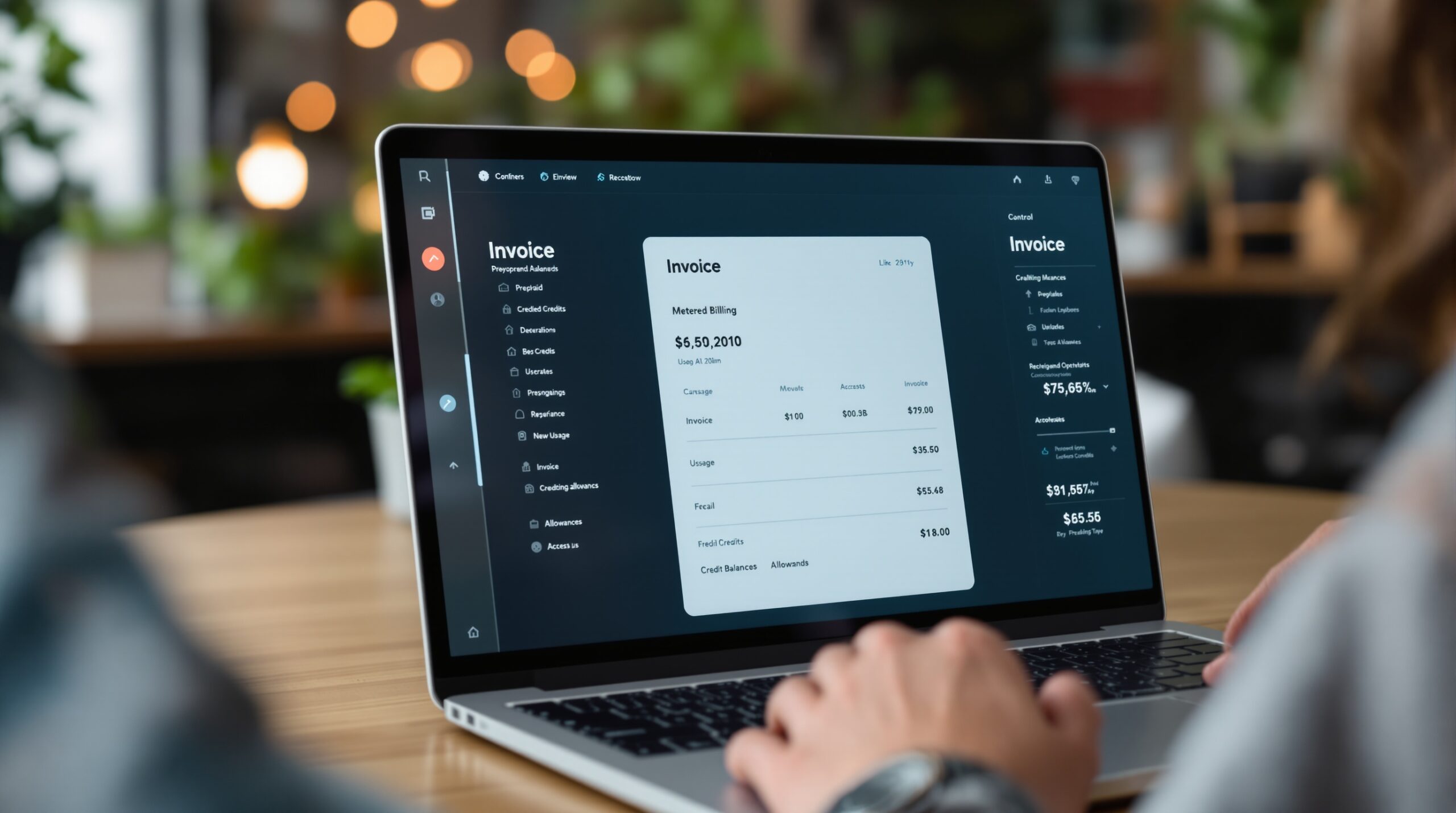
That is the weakness Stripe’s metered billing overview only sketches at a high level. Measurement is necessary, but auditability is what prevents the bill from becoming a support queue. If the product team cannot show timestamps, rounding rules, and the original usage event in a form the customer can inspect, the system is technically correct and operationally fragile. In busy months, that often shows up as 5-10% of accounts asking for manual review.
Failed renewals turn billing into an access decision
A failed card on a postpaid meter usually means the invoice is already due. At that point, the business has to choose between grace, throttling, or suspension. In AI products, where consumption can continue quietly in the background, that choice decides whether the company loses revenue or the customer loses trust.
RevenueCat’s docs on billing grace periods are useful even outside subscription-first apps because they make one thing obvious: payment failure is also an access-control event. If your team does not define that rule ahead of time, support invents it under pressure. That is how billing becomes inconsistent across accounts, reps, and regions.
Hard stops save exposure, but they can create noisy support
Finance usually likes a hard stop because it limits unpaid usage. The problem is customer workflow. A paused AI tool, a blocked data pipeline, or a hosted workspace can go from useful to offline in one failed renewal.
The trade-off is easy to see once you look at the support load. Hard stops reduce unpaid usage, but they often increase tickets in products used daily. A short grace window or a throttled mode is often cheaper than a perfect stop because it keeps the service usable while the payment issue is fixed. In practice, that matters more than the elegance of the billing policy.
Allowance resets hide the problem until the end of the cycle
Recurring usage allowances can feel simpler than metering because they reset on a schedule. The catch is that the customer may not notice the edge until the last 10% disappears. The complaint then arrives at month-end, not when the limit was actually crossed.
That is a different failure mode from prepaid credits. With an allowance, the problem is often surprise at reset or overage. With credits, the problem is depletion and top-up logic. Teams that treat them as the same model usually build the wrong alerts and then wonder why customers keep saying, “I didn’t know we were close.”
Metered billing vs credits vs allowances in real operations
The choice is not philosophical. It changes when the customer sees the bill, whether the product can keep running after payment failure, and how often support has to explain the same number twice. That is why a table is more useful here than another benefits list.
| Billing model | Best fit | Operational risk | Safer control |
|---|---|---|---|
| Postpaid metered billing | API, AI, infrastructure, or usage-heavy SaaS where exact consumption matters | Invoice disputes arrive after the usage has already happened | Shared event ledger, near-real-time usage view, and a defined grace or throttle rule |
| Prepaid credits | Products where buyers want a hard spend cap and the vendor wants payment before usage | Balances run out mid-workflow and support has to explain the stop | Low-balance alerts, automatic top-up options, and a clear depletion policy |
| Recurring allowance | Subscription products where stable access matters more than charging every unit | Customers discover overage or reset rules too late in the cycle | Visible allowance progress, reset reminders, and written overage handling |
| Recurring access with wallet settlement | Global digital services that need recurring payments without card or bank dependency | Pricing is simple, but payment failure can still interrupt access | Self-custody settlement, renewal status visibility, and fallback access rules |

Metered billing wins when the customer expects to pay for exact consumption and the product can explain usage cleanly. That is common in developer products, AI inference, and infrastructure services. The model is precise, but only if the event trail is strong enough to survive a dispute.
Prepaid credits win when budget certainty matters more than perfect end-of-month reconciliation. Buyers like the wallet-like feel. Finance likes collecting cash early. The weak point is depletion surprise, especially if the top-up rule is not obvious or the balance disappears at an inconvenient moment.
Recurring allowances win when access needs to feel stable and the buyer wants a monthly ceiling without micromanaging every event. That is why allowance-based plans often fit teams with predictable usage patterns better than pure meters. If you need to separate access from usage credits, this model usually gives the cleanest contract language.
The failure modes that decide the model
What usually breaks a billing model is not the math. It is the place where product, support, and finance all assume a different rule is in force. Once that happens, the system starts producing tickets, not trust.
How invoice timing shapes the story customers tell
With metered billing, late invoices create late surprises. With credits, the surprise is front-loaded into the top-up. With allowances, the surprise is often hidden until reset or overage. The issue is not simply when cash moves; it is when the customer learns that the limit was crossed.
That timing matters because people dispute what they did not see coming. A team that only checks monthly close is often 30 days late on the real cause. The fix is not “better reporting” in the abstract. It is showing the customer the same meter the system uses, in near real time, before the invoice becomes an argument.
What happens when renewal or top-up fails
This is where many teams pick the wrong default. A failed renewal on a credit balance can be tolerable if you allow grace. A failed top-up on a prepaid wallet can be a hard stop if the product is sold as strict self-service. A failed postpaid invoice is harder because the usage already happened.
If the product is live, even a 15-minute outage can feel expensive. If the product is non-live, a hard stop is less painful. The right answer depends on whether the service is part of the customer’s workflow or just a consumable utility. A support team can live with either policy; a user usually cannot live with both changing at random.
Throttle, grace period, or hard stop
A throttle is often the most useful compromise. It keeps the product usable at a lower rate while the payment issue gets fixed. Grace periods work when users need time to correct a card, approve a PO, or wait for a procurement check. Hard stops work when exposure is the bigger risk.
Teams that jump straight to hard stop usually discover the support cost a week later. Teams that allow too much grace discover leakage the next month. A middle policy usually fits SaaS better than either extreme because it protects revenue without turning billing into a hostage event.
When usage disputes become support load
Every dispute has a pattern. One customer disputes the data source. Another disputes the time zone. A third says the allowance reset was unclear. Support ends up repeating the same explanation in slightly different words.
If that keeps happening, the model is costing more than the software. A practical warning sign is 5-10 billing tickets per 100 active accounts per month. At that point, the issue is not a missing macro in support. It is that the billing model does not match how buyers think about value.
When the wrong model costs more than the billing software
Metered billing software is rarely the expensive line item. The expensive part is churn from bill shock, manual reviews, blocked access, or delayed collections. Those failures show up as lost expansion, slower closes, and more support work.
In B2B SaaS, the wrong model can easily cost 2-4% of revenue through leakage, dispute handling, or delayed payment recovery. That is why the model choice belongs in product operations, not just pricing strategy. It changes how the company grows, and it changes how often the team has to clean up its own rules.
Practical definitions that matter for the choice
Definitions only help if they change the next decision. Here, the useful line is simple: metered billing measures use after or as it happens; credits pre-sell use; allowances reserve a right to use within a reset period.
Metered billing software
Metered billing software records usage events, rates them, and turns them into an invoice. It works best when the event trail is clean and the customer accepts pay-for-use logic. It is weaker when access must be protected from abrupt suspension or when buyers want a fixed spend ceiling.
Prepaid credits
Prepaid credits are a wallet. The customer buys value before consuming it. That model is helpful when procurement wants a fixed budget and the business wants cash early, but it makes depletion rules and expiry policies part of the product.
Recurring usage allowances
A recurring allowance is a resettable limit attached to a subscription. Unlike credits, it usually does not feel like a store of value. The account gets a monthly or weekly quantity, and the real questions are what happens at the edge and what happens after the edge.
Why credits and allowances are not the same thing
Teams mix them up because both sound like “prepaid.” They behave differently. Credits deplete; allowances reset. Credits make top-up behavior central. Allowances make overage and rollover rules central.
If the buyer thinks in budgets, credits are usually easier to explain. If the buyer thinks in monthly access, allowances are usually easier to sell. That distinction matters more than the pricing page admits, which is why our sister piece on Recurring crypto payments and how they work treats renewal timing as an operational problem instead of a slogan.
For teams deciding whether usage should sit inside the same stack as quotes, invoices, and CRM, the deeper architecture question is similar to the one discussed in usage based AI billing. The billing model is only useful if the product, the ledger, and the customer view stay aligned.
When metered billing is the wrong choice
Metered billing is the wrong choice when the company cannot explain usage clearly or when payment failure should not become an immediate product outage. If the customer needs a fixed spend ceiling and a simple access rule, prepaid credits or recurring allowances are often safer.
That does not mean metering is bad. It means exact charging is not enough on its own. A model can be mathematically fair and still be operationally wrong if it creates disputes faster than the team can resolve them. The model should lower support load, not create a second product inside support.
When prepaid credits are the wrong choice
Credits are a poor fit when the product is used continuously and the customer expects service to continue without manual top-ups. They also get messy when a balance expires, a refill fails, or usage drops through the floor right after the buyer thinks the wallet should still be active.
If buyers do not want to think about depletion, credits create friction. If the product has live workflows, sudden wallet exhaustion can feel like a shutdown, not a billing event. In those cases, recurring allowances or postpaid metering with a grace policy usually fit better because they separate “the account is active” from “the invoice was paid early.”
When a recurring allowance is the better middle ground
An allowance is often the best option when the customer wants predictability, but the product still needs usage flexibility. It works well when the monthly package is the main thing the buyer understands and usage is simply how the package gets consumed.
That middle ground is useful for SaaS teams that do not want a pure wallet model, but also do not want every API call to feel like a separate transaction. Allowances can also reduce support noise when the customer prefers a monthly ceiling with a known reset date. The risk is that rollover and overage rules must be very clear; otherwise, the model looks simple until the first edge case lands in support.
Readiness checklist for the model you choose
Do the model work before you lock pricing. Once support starts handling exceptions manually, the model becomes political instead of operational. That is usually when the real cost starts.
- Map the exact moment the customer sees usage. A 24-hour delay is manageable; a 30-day delay is where most disputes start.
- Write the failure rule first. Decide what happens after a failed renewal, a failed top-up, or an over-limit event before launch.
- Pick one access policy per model. Hard stop, throttle, or grace period should not change by rep or by mood.
- Test the dispute path with three real cases: delayed usage, wrong tenant attribution, and allowance reset confusion.
- Make sure the customer can see the same usage view your billing engine uses, or the support team will end up translating numbers all month.
For teams that want to keep the billing logic closer to the rest of the stack, the practical implementation questions are similar to those in our sister article on metered billing vs credits. The difference is not the labels; it is how the labels behave when payment fails.
Why teams settle on Zyrox for this
Once a SaaS team decides that payment continuity matters as much as price calculation, the billing question changes. Zyrox fits the part of the stack where recurring billing and access control need to stay tied to direct wallet settlement, not a separate balance layer that can freeze, delay, or obscure the payment event.
That matters most when the business wants self-custody, automated recurring payments, and fewer moving parts between invoice timing and fund settlement. The simpler the path from charge to receipt, the fewer places there are for a renewal failure, a stuck balance, or a support mismatch to hide.
That is why Zyrox tends to make sense for subscription businesses, creator platforms, hosting, and digital services that want control over revenue flow without adding extra reconciliation steps. If you are comparing billing logic as part of a larger monetization system, a first look at Zyrox is usually enough to see whether the architecture matches the way your product actually bills.
Ready to build the setup behind this?
If this is the operating problem you need to solve, use the product page as the next step. It shows where build your setup fits and what the platform covers beyond a single payment widget.
Frequently asked questions
What happens if a prepaid credit balance runs out mid-cycle?
You need a depletion rule before launch. Most teams either hard-stop, allow a short grace window, or trigger an automatic top-up. If that rule is unclear, support ends up deciding case by case, which is where trust drops fastest.
When does a recurring allowance fit better than credits?
Use an allowance when the buyer thinks in monthly access, not in wallet balance. It is easier to explain for predictable usage patterns and cleaner for subscription-style purchasing. Credits work better when the customer wants explicit prepayment and the ability to spend down a balance.
How do you handle disputes when usage data is delayed?
Show the same event trail that feeds the invoice, not a summary after the fact. Delayed usage data increases the chance that a customer argues from memory rather than evidence. A visible ledger usually cuts the back-and-forth far more than a generic billing support inbox.
What if a failed renewal should not cut off access immediately?
Use grace, throttling, or a limited mode instead of a hard stop. The right choice depends on whether the product is part of the customer’s daily workflow. Live products usually need softer handling than disposable utilities.
How do you decide between hard stop and throttling?
Choose hard stop when unpaid exposure is the bigger risk and throttling when continuity matters more. Throttling usually works better for SaaS and AI products with active users. Hard stop makes more sense when the product can safely pause without disrupting a live workflow.
When is metered billing software the wrong choice for SaaS or AI?
It is the wrong choice when the company cannot explain usage clearly, or when payment failure should not become an immediate product outage. If customers need a fixed budget and simple access rules, prepaid credits or recurring allowances are often safer. The model should reduce support load, not create a new one.

Dmitry Alentev
Builds SaaS platforms for content creators, agencies, and entrepreneurs. Writes about the business mechanics behind creator-economy products and how custom software actually ships.
Reviewed under our Editorial standards.