Quick answer
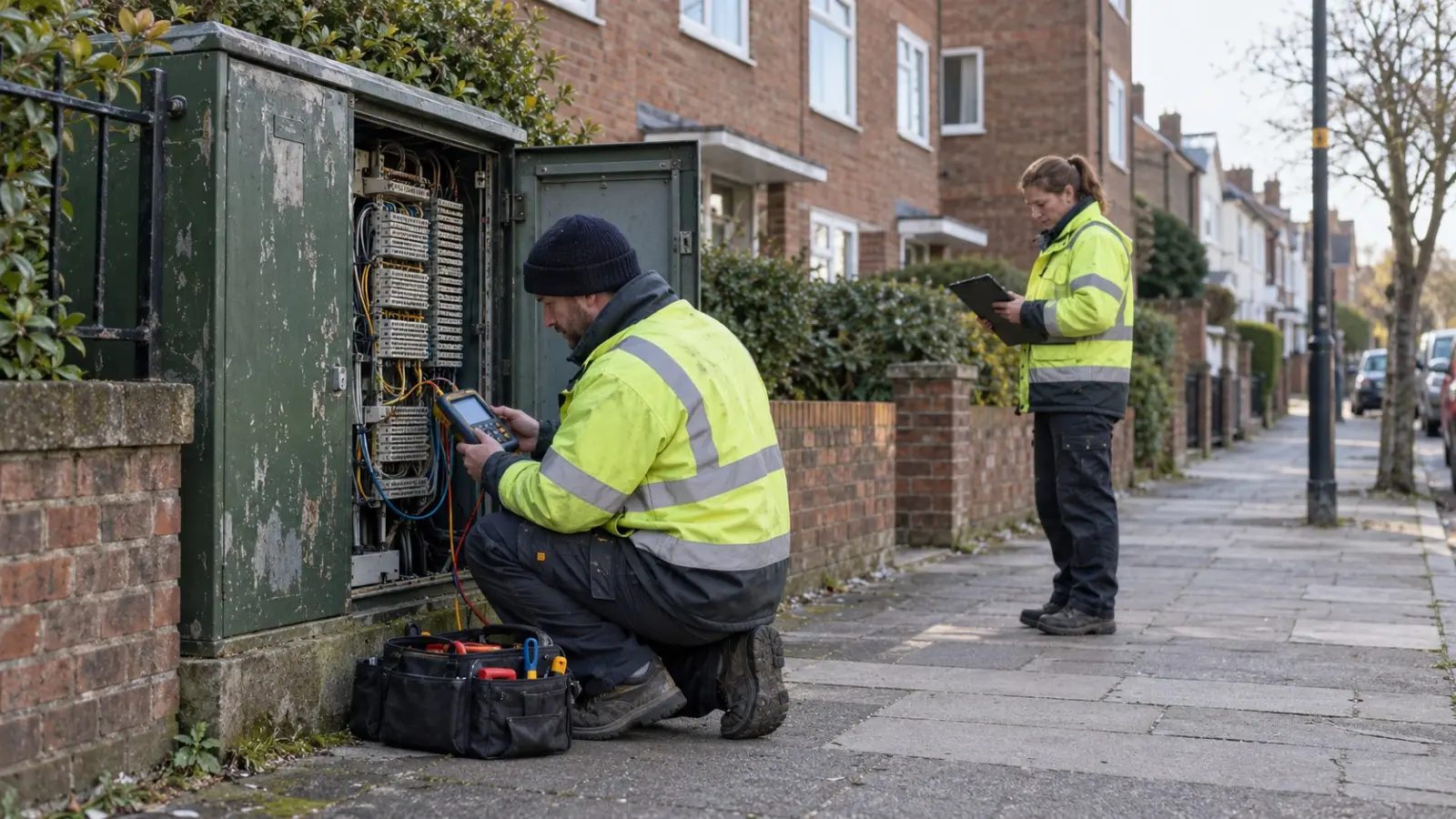
Crypto payments for utility bills work when confirmed receipts are matched to the correct account, billing period and balance category before service status changes. Use recurring stablecoin collection for agreed fixed charges and account-linked payments for variable bills. Keep deposits, arrears, prepaid credit and restoration decisions distinct. A wallet receipt proves money arrived; it does not establish that a disconnection should stop.
Where crypto payments for utility bills belong
A customer sends stablecoins before a cutoff deadline, but the account still shows unpaid. That is the decision facing utility and telecom operators: introduce crypto as an account-linked collection rail only when a confirmed receipt can reach the billing and service workflow reliably. The useful part is recognizing which obligation the tokens settle.
For a fixed broadband plan, the obligation is an agreed recurring charge. For metered electricity or water, consumption and billing adjustments establish the amount owed. A prepaid telecom balance purchases future service; a postpaid payment reduces an existing receivable. Keep the tariff, meter calculation and account balance in the billing system, with crypto collection downstream of that calculation.
Consider a hypothetical broadband operator offering wallet payments alongside its existing methods. It initially plans to activate service whenever a transfer reaches its treasury wallet. During design, it discovers that a customer can owe both a refundable deposit and an overdue bill. An undifferentiated balance would let a deposit appear to clear the bill. The better decision is to assign every payment request an account, an obligation and an allocation rule before collecting anything.
Start with customers who already hold the accepted stablecoin and can use the supported network. Requiring unfamiliar customers to buy crypto merely adds another checkout. For an operator, direct wallet settlement can remove a custodial collection step, but does not remove treasury access controls, customer verification where applicable, or the need to resolve billing disputes. Keep a usable alternative payment route for customers who cannot complete a wallet transaction.

Map the receipt to an account and a service decision
Use an allocation matrix to separate financial posting from operational permission. The proposed rules below are a starting design for the operator to adapt to its contracts and jurisdiction. They are not disconnection law. The billing system should return both the updated balance and the permitted service action after applying a receipt.
| Account state | Receipt allocation | Service decision |
|---|---|---|
| New account: deposit required | Post to the deposit liability, separate from bill receipts | Release activation only after deposit and other eligibility checks pass |
| Metered account: estimated bill | Apply against the estimated receivable; retain estimate status | Do not mark the meter reading as actual or reset the billing cycle |
| Postpaid account: partial payment | Allocate under the disclosed rule; retain the unpaid balance | Reassess the cutoff hold under applicable policy, not wallet activity |
| Account with arrears and a current bill | Separate arrears allocation from the current-period balance | Use the resulting eligible debt and protections to evaluate service |
| Prepaid account: confirmed top-up | Credit the designated prepaid balance after required checks | Release credit through the provisioning or meter system |
| Disconnected account: payment received | Post the receipt and assess restoration eligibility separately | Create a restoration request; confirm completion before showing active |
| Payment confirmed after cutoff deadline | Retain submission, confirmation and posting timestamps | Route to exception review; do not silently backdate or promise restoration |
Read each row as a boundary between systems. The gateway reports collection status; the account ledger applies money; the service system carries out an authorized change. Deposits remain separately identifiable because holding customer security is not the same as earning service revenue. An estimated bill remains estimated after payment because payment supplies no new meter reading. If actual consumption changes the bill later, preserve the original receipt and post an adjustment against it.
Prefer an account-linked request over a reusable treasury address with instructions to email a transaction hash. Store the invoice identifier, token contract, network, accepted amount, transaction reference and allocation outcome. A matching wallet address alone is weak account identity: a customer may pay from another wallet, and a shared wallet may fund several accounts. Quarantine unmatched receipts for review instead of guessing which service to credit.
Record when the customer submitted the payment, when it met your confirmation policy and when it posted. Those events can fall on opposite sides of a cutoff. Define which event governs any payment hold, including the timezone, and provide an exception route when evidence arrives late. Before connecting service controls, crypto payment blockchain reorganization handling deserves attention because an initial observation and an accepted receipt are different states.

Test partial payment before automating restoration
The hypothetical broadband operator now tests the difficult account rather than a clean subscription renewal. Its hypothetical inputs are a $20 deposit already held, a $60 current bill, $30 in arrears and a new 50 USDC payment. For this illustration only, it values each USDC at $1 and allocates receipts to arrears first, then the current bill.
Under those hypothetical assumptions, service debt before payment is $60 + $30 = $90. The 50 USDC receipt credits $50: $30 clears arrears and $20 reduces the current bill. Remaining service debt is $90 − $50 = $40. The deposit remains $20, separately held. Applying it again would count money reserved for security as though it were a fresh payment. The receipt reduces a receivable; it does not create additional billed revenue.
Assume, hypothetically, that this account has already passed its service cutoff and that the operator's approved restoration policy requires full settlement of service debt. The payment therefore leaves restoration ineligible. If a subsequent hypothetical 40 USDC payment is accepted at the same assumed dollar value, the remaining $40 clears. Even then, the ledger should request restoration, not declare the connection active: provisioning must confirm that service has actually returned.
For a planning calculation using Zyrox's 2027 platform fee of 0.5%, the hypothetical 50 USDC collection carries a 0.25 USDC fee and leaves 49.75 USDC after that fee, before network or conversion costs. Keep the customer's $50 account credit distinct from the operator's net proceeds if the operator absorbs the fee. Do not short-credit the account by the fee while also recording the fee as an expense. That would make a fully paid bill look underpaid.
This exercise changes the integration requirement. The operator needs receipt allocation and restoration acknowledgments, not merely an automatic renewal switch. Plan crypto billing accounting integration around that audit trail so finance can reconcile deposit liabilities, reduced receivables, collection expenses and wallet movements without treating them as interchangeable balances.

Keep collection authority separate from customer rights
Recurring wallet collection fits an agreed fixed telecom charge more directly than an estimated meter bill that can change after a reading. A wallet approval permits a defined collection mechanism; it does not prove that a variable charge is correct, that the customer received notice, or that a service restriction is permitted.
For a variable bill, preserve the customer's notice and dispute process before collection. Do not infer support for arbitrary changing amounts from support for subscriptions. Decide whether the flow should request payment against each finalized invoice or use a separately validated mandate arrangement. Prepaid service also needs a clear promise about when purchased credit becomes usable. Confirmation of receipt and delivery of credit need separate acknowledgments, especially if a meter or provisioning endpoint is unavailable.
An irreversible transfer does not make an erroneous bill correct or extinguish a refund obligation. Consumer protections, disconnection restrictions, sanctions screening and accounting duties depend on the operator and jurisdiction. Non-custodial settlement describes the funds path, not an exemption from those duties. Before launch, resolve do businesses need a license to accept crypto payments for your actual role, including whether you merely receive payment for your own service or also handle money for others.
A stablecoin balance is not the same asset as the currency used to pay staff or wholesale suppliers. Specify which token and network are accepted, who bears conversion costs and how long a quoted conversion remains valid. Measure the selected route during testing and decide who funds transaction costs. Reject unsupported routes visibly rather than promising that any transfer labeled USDC will credit the account.
Do not make essential-service access depend on a support agent finding a transaction manually. Keep exception ownership clear for wrong-account receipts, disputed allocations and delayed posting. Show the customer whether money is pending, credited or under review, and show service status separately. When these states cannot be distinguished in your billing system, begin with assisted account payments rather than unattended service changes. Automation cannot repair a missing definition of paid.
Pilot the account workflow before scaling collection
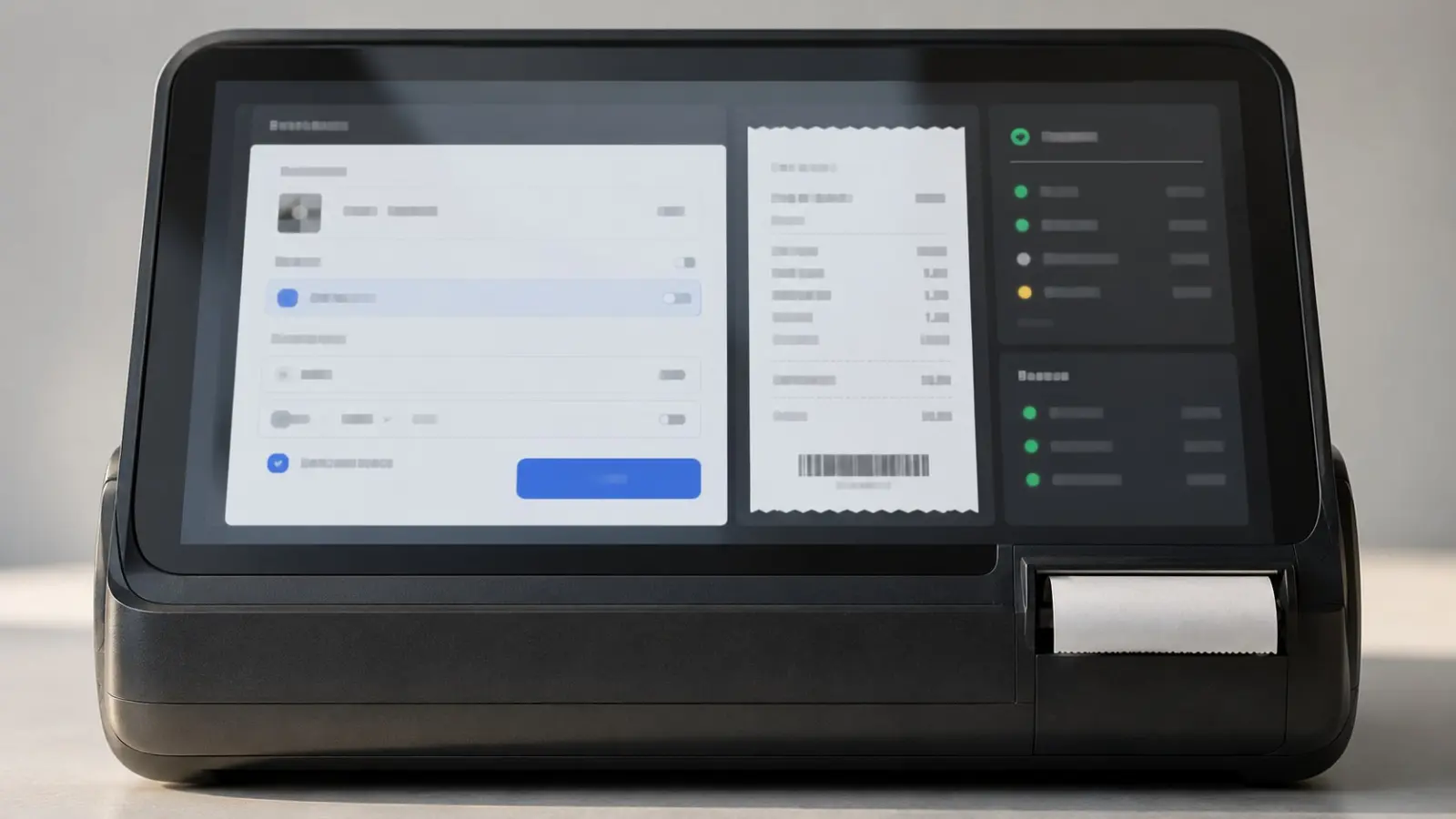
Make the launch gate an explainable account outcome. Start with a limited, reversible billing integration and retain existing service protections. The proposed sequence below produces something operations can verify: a receipt attached to the right obligation, a reconciled balance and a service decision that follows the operator's rules.
- Define account categories and allocation order with billing, finance and service operations. Document deposit treatment, estimated-bill adjustments and the event that governs a cutoff hold.
- Choose the accepted token and network, confirmation policy, treasury wallet controls and customer communication. State how fees, conversion differences and unsupported transfers are handled.
- Connect the payment request to the invoice and account identifiers. Make repeated event delivery harmless, so a retried notification cannot credit the account again or issue duplicate restoration work.
- Replay every matrix row through a controlled pilot. Include a partial receipt, delayed confirmation, an unmatched transfer and a restoration request that provisioning cannot complete.
- Reconcile wallet receipts to account postings and fee records. Give support a receipt-level explanation, then authorize broader rollout only when unresolved exceptions have an owner and a documented outcome.
For the hypothetical broadband account, the acceptance test is specific: arrears clear, the current bill retains its unpaid balance, the deposit stays untouched and restoration remains blocked until the approved conditions are met. Repeat the receipt notification and check that nothing changes. Then complete the remaining payment and verify that a restoration request appears without an early active-service label. These observations test the account rules.
Once that path works, evaluate collection tooling against the remaining job. Zyrox provides non-custodial recurring USDC and USDT billing, payment links and a Stripe-compatible API, with funds settling directly to the merchant wallet. Automated billing includes up to five retries. Treat those as collection capabilities: account allocation, meter adjustments and service-disconnection decisions still need to be implemented and verified in the operator's systems.

Connect collection after the account rules are clear
If your pilot can explain each receipt and service outcome, Zyrox is a practical next step for evaluating recurring stablecoin collection. Open Zyrox, configure a payment flow for a pilot account and verify that its settlement can be matched to your billing ledger before enabling any service action.
Zyrox is free through December 31, 2026; from 2027, the fee is 0.5% of successful payments. Use the broader billing-solution guide to assess fit, then validate the account workflow in the app.
Frequently asked questions
Can customers pay utility bills with crypto directly?
Only when their supplier accepts the payment route or an authorized intermediary provides it. A transfer to a wallet does not pay an account unless the supplier can identify and credit the obligation.
Does a wallet approval replace a utility payment mandate?
No. Wallet approval authorizes a technical collection mechanism. Validate the amount, notice, cancellation and dispute requirements for the service separately before relying on recurring collection.
Should a deposit count toward an unpaid bill?
Keep it separately identified unless the contract and applicable rules permit applying it to the debt. A deposit already held is not a new receipt and should not be credited again.
What happens if crypto confirms after the cutoff deadline?
Preserve submission, confirmation and posting timestamps. Apply the operator's approved cutoff policy and route exceptions for review; confirmation alone should not silently backdate payment or guarantee restoration.
Can crypto payments automatically top up a prepaid meter?
They can fund an account credit, but delivering that credit requires a validated integration with the meter or provisioning system. Show receipt confirmation and credit availability as separate states.
Does paying an estimated bill make the meter reading final?
No. Payment reduces the estimated receivable without changing the quality of the reading. When a verified reading changes the charge, retain the receipt and record the resulting billing adjustment.
Are crypto utility payments free of refund obligations?
No. The transfer mechanism does not cancel obligations arising from incorrect billing, consumer rights or the service contract. Establish an authorized refund process and retain its accounting trail.
What does Zyrox charge for successful collections?
Zyrox is free through December 31, 2026. From 2027, its platform fee is 0.5% of successful payments. Budget separately for network and conversion costs that apply to the chosen payment route.

Kate Karavaeva
Customer success and operations at Scrile. Specializes in corporate administration, project coordination, and the operational mechanics behind B2B retention. Writes about onboarding, retention, and what actually moves customer outcomes.
Reviewed under our Editorial standards.