
Quick answer
WooCommerce gives technical teams control over crypto plugins, hosting and order logic. Shopify reduces infrastructure work but limits checkout integrations to supported routes and may add third-party transaction fees. For either platform, verify the exact token, network, settlement model and renewal mechanism before choosing a provider. A successful one-time USDC payment does not prove recurring billing works.
WooCommerce vs Shopify crypto payments: the fast comparison
A customer pays, but their membership stays locked. That is the failure this choice must prevent. WooCommerce vs Shopify crypto payments comes down to who controls the connection between payment and access: choose WooCommerce for integration freedom with maintenance ownership, or Shopify for managed commerce when a supported provider meets your requirements. Neither platform choice alone establishes recurring billing.
Consider a hypothetical merchant selling monthly design-resource memberships. Its small operations team initially favors Shopify because it wants less infrastructure work. Then it discovers that accepting USDC at checkout does not establish permission to collect the next renewal. The better decision starts with the subscription lifecycle, not the cryptocurrency badge. A checkout can accept money perfectly and still leave billing unfinished.
| Decision | WooCommerce | Shopify |
|---|---|---|
| Setup and providers | Gateway plugin or custom extension; assess options such as BTCPay Server and DePay | Supported additional payment methods; assess options such as Solana Pay and BitPay |
| Fees | Gateway, hosting, extensions and maintenance | Store plan, gateway and applicable third-party transaction fees |
| Control and custody | Control server and payment integration; custody depends on provider | Managed platform; custody still depends on provider |
| Customization | Own callback handling and order-state extensions | Work within supported payment and checkout routes |
| Technical effort | Maintain WordPress, plugins, security and delivery jobs | Maintain provider configuration and order/access integration |
| Recurring billing | Verify plugin, gateway and subscription extension together | Verify provider and subscription workflow together |
Named alternatives expose different requirements. BTCPay Server belongs in a Bitcoin-focused, self-hosted evaluation; it is not evidence of USDT subscription support. Solana Pay is relevant to a Solana-based USDC checkout. BitPay offers a processor route with fiat settlement options, while DePay uses a wallet-oriented smart-contract approach. Confirm current availability, custody and asset coverage before contracting.

WooCommerce crypto gateways and plugins: control has an owner
WooCommerce lets you extend the gateway-to-order connection, but the merchant owns the working result. A plugin can simplify checkout installation without taking responsibility for hosting, security, subscription compatibility or missed payment notifications.
For the membership merchant, request a demonstration that starts with an unpaid order and ends with access enabled after the required confirmation. The integration should retain an order reference and provider payment identifier, authenticate the callback, validate asset and amount, then update the order. Repeated delivery must not issue duplicate access. A browser redirect is useful navigation; it is not proof that funds arrived.
Assign ownership for WordPress and plugin updates, credential rotation, backups and failed background jobs. Keep payment callbacks outside page caching rules and test them after changes to security filters. A slow server or blocked endpoint can leave a confirmed payment disconnected from its order. Self-hosting buys control over that repair, along with the responsibility to notice the break.
Compare crypto plugins vs hosted crypto checkout by tracing funds and messages separately. A plugin can send customers to a hosted provider; a hosted checkout can still settle directly to your wallet. Neither interface proves custody. If control over infrastructure is decisive, the self hosted payment gateway guide helps separate operating the software from controlling funds. Require the proposed gateway to work with your actual checkout and subscription extensions.
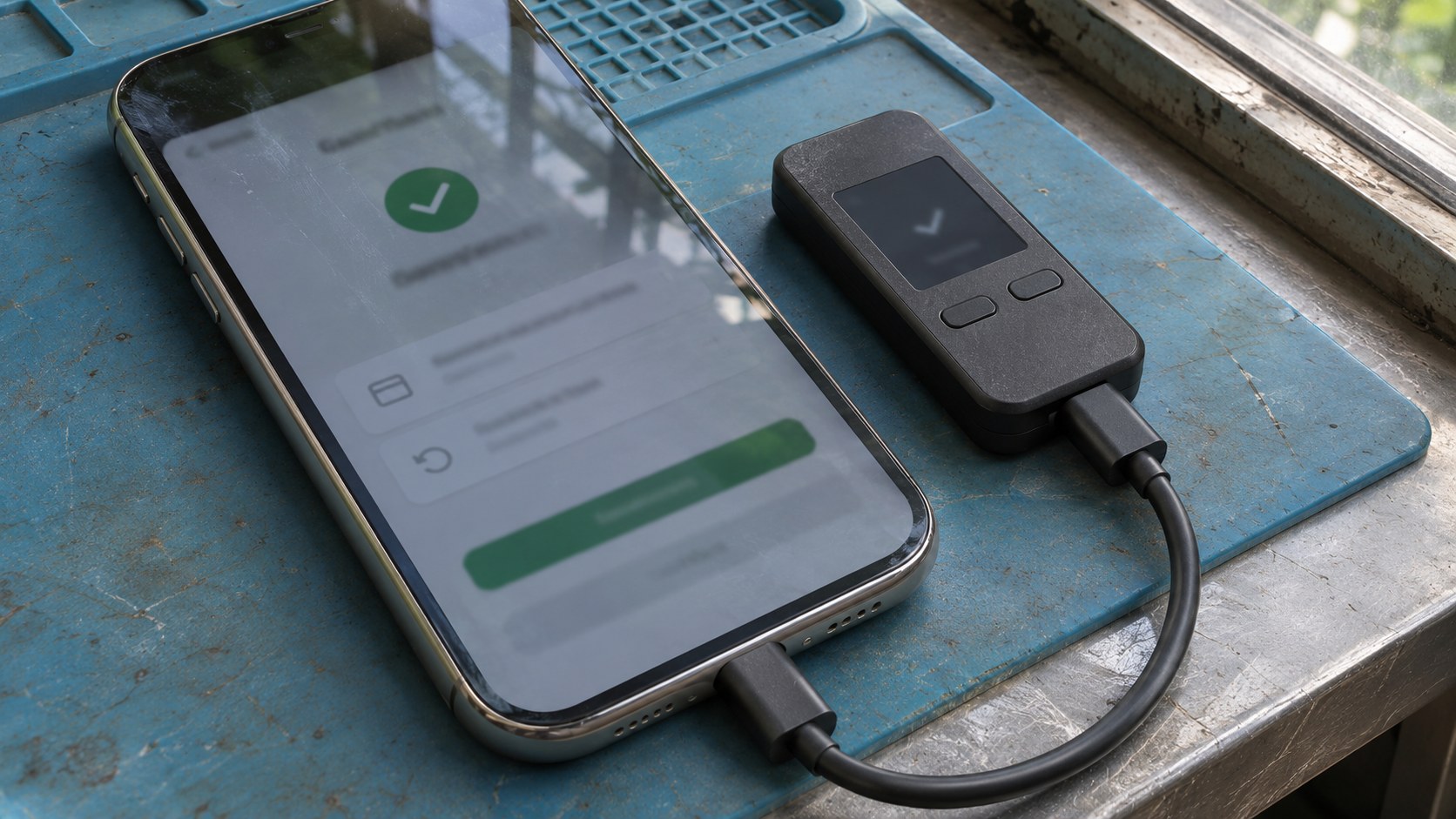
Shopify crypto providers and restrictions: qualify the route first
Shopify offers a managed commerce environment, not an unrestricted gateway installation surface. Check the payment methods available to the specific store, the provider’s merchant eligibility and any platform-level fee before designing around its checkout.
Use the store’s payment settings to find providers for the required currencies, then ask each candidate about the merchant entity, selling regions and industry. Availability in a list is not approval for your business. This matters for adult services and other restricted categories: switching settlement assets does not override provider terms, sanctions obligations or consumer rules.
A checkout API elsewhere on the internet does not establish permission to install a custom Shopify payment gateway. Ask for the supported integration route and an end-to-end demonstration in a representative store. Clarify whether a payment link sits outside native checkout, how the order is created and which system handles tax, discounts and access. A separate link can be useful, but disconnected order records create reconciliation work.
Our hypothetical merchant therefore keeps Shopify on the shortlist only if a supported path covers its renewal and access requirements. If the provider merely sends customers a new invoice each month, that is customer-initiated repayment, not automatic collection. Moving to WooCommerce helps only when the chosen integration actually closes that gap; extra control is not a recurring-billing feature by itself.

Checkout UX: USDT, USDC and BTC need explicit instructions
Show the token and network together, explain quote expiry, and separate payment detection from order confirmation. Customers should know which wallet action completes the purchase and where to request a refund without guessing from a transaction hash.
To accept USDT on an ecommerce store, specify the supported network before presenting an address or wallet request. USDT on different networks is not a single delivery route. Apply the same discipline to USDC and distinguish Bitcoin from Lightning when offered. Do not promise a universal confirmation time or a fixed gas charge: both depend on the selected route and conditions. Test actual wallet prompts and record who pays each network fee.
Define what happens when a quote expires, a customer underpays, or a transaction confirms after inventory has been released. A visible timer should explain the price or reservation deadline, not imply that an already-broadcast transfer disappears. For memberships, keep access pending until the payment policy is satisfied and reconcile late payments before asking the customer to pay again.
Refunds need a separate route. Confirm the customer’s receiving address and network through an authenticated support process; the sending address may belong to an exchange. Specify whether the refund follows the original token amount or the order’s currency value, and who covers fees. Record the outgoing transaction against the original order. Our hypothetical merchant tests this before launch, while the support conversation is still inexpensive.
If your customers need several chains, accept USDC and USDT on multiple blockchains explains why network selection and reconciliation must stay aligned. Start with a supported route your buyers can actually use, then expand after payment exceptions have a clear owner.

TCO and security: compare the same payment workload
Ecommerce crypto integration costs include gateway charges, applicable platform fees, network costs and the labor needed to keep orders correct. Compare those costs over the same successful payments and period; a low processing percentage cannot settle the platform decision.
Use this hypothetical planning case for the membership merchant: 1,000 successful monthly payments of $20 produce $20,000 gross receipts, with no refunds or failed collections. Assume a card quote of 2.9% plus $0.30 per payment. That makes the card processing bill $880. This is an illustrative quote, not a claim about the merchant’s actual contract.
For an eligible, confirmed Zyrox integration after December 31, 2026, its 0.5% processing rate would charge $100 on the same $20,000. The processing-only difference is $780 per month. Processing is free through December 31, 2026; network fees remain separate. These are processing comparisons, not profit estimates or complete Shopify-versus-WooCommerce totals. Do not apply the promotional rate to a later budget.
The merchant should price incremental hosting, extensions, developer upkeep, platform transaction charges, network fees and refund support against that processing difference. Measure those costs instead of assuming they vanish under self-custody. Keep existing platform costs separate from costs caused by the proposed change. Refunds and failed renewals would change the example’s workload and must be modeled before using it as a business forecast.
Confirmed on-chain transfers do not have card-network chargebacks, but fraud and disputes remain: stolen accounts, incorrect access grants and refund impersonation still need controls. Protect merchant keys, authenticate notifications and limit administrative access. Separate fulfilment permission from wallet spending permission. Self-custody removes a processor’s custody role; it does not remove sanctions screening, accounting or other obligations applicable to the merchant. Use crypto billing accounting integration to plan the records your finance team will actually reconcile.

Which ecommerce stack should merchants choose?
Keep Shopify when supported checkout and billing routes satisfy the business and infrastructure simplicity matters most. Choose WooCommerce when required customization justifies owning the integration. Reject either proposed setup if renewal, settlement or refund behavior remains unproven.
Use this proposed weighted RFP checklist, rather than counting features. For a hypothetical lean team, assign operating burden a weight of 4, renewal fit 3, custody and settlement 2, and checkout customization 1. For a hypothetical technical team requiring custom access rules, use weights of 1, 3, 2 and 4 respectively. These are suggested priorities, not measured platform scores.
Ask each implementer to demonstrate the same purchase, renewal, cancellation, delayed callback and refund. In this proposed scoring method, rate each criterion from 0 for unmet to 5 for demonstrated fit, multiply by its weight and add the results. Before scoring, make legal eligibility and required token-network support pass-or-fail gates. A high score cannot rescue a gateway that cannot serve the business.
The membership merchant’s better decision is conditional: retain Shopify if a supported provider proves automatic renewal and access reconciliation; otherwise evaluate a WooCommerce implementation with an accountable maintainer. If neither passes, separate subscription billing from storefront selection before migrating. For the collection mechanism itself, subscription payments in usdc explains the gap between wallet approval, a scheduled collection and a paid entitlement.
Before signing, confirm the merchant entity is eligible, the exact asset and network work, the funds reach the intended wallet, and cancelled subscriptions stop collecting. Name the person responsible for failed notifications and refunds. Then confirm the complete fee schedule and test the lifecycle. Those answers decide which platform fits; the number of coins displayed at checkout does not.
Validate the integration before moving the store
If direct wallet settlement and stablecoin renewals are requirements, evaluate Zyrox after confirming compatibility with your chosen platform. Zyrox provides payment links, a checkout API, signed webhooks and testnet testing. It supports one-time BTC, ETH, TRX, USDT and USDC payments, plus recurring USDT and USDC payments with automatic retries.
Use Zyrox to test the payment-to-order flow before launch. Confirm the supported wallet approval and recurring collection path for your selected asset and network, then create a test payment at app.zyrox.io. Direct settlement still needs correct order mapping, access rules and refund operations.
Frequently asked questions
Is WooCommerce more flexible for crypto than Shopify?
Yes, it gives the merchant more control over plugins, hosting and order logic. That flexibility comes with responsibility for maintenance and integration reliability; it does not prove a particular gateway supports recurring collection.
Does Shopify allow custom crypto gateways?
Do not assume an arbitrary gateway API can be installed. Confirm a supported Shopify payment integration route and its availability for your store before commissioning custom development.
Are crypto payments automatically refunded?
Shopify crypto payments require a manual refund through the gateway. On WooCommerce, verify the specific integration. In either case, define address verification, network, amount and fees before processing a refund.
Can I accept USDT and USDC on either platform?
Potentially, through a compatible provider. Confirm each token and network combination for the actual store and merchant entity; a provider’s general asset list is not enough.
Does crypto checkout include automatic subscriptions?
No. A one-time payment does not authorize future collection. Verify the approval mechanism, scheduling, balance failures, cancellation and entitlement updates independently.
Does a WooCommerce plugin mean payments are non-custodial?
No. The plugin is an integration component. Trace who receives and controls the funds, whether withdrawals require approval, and which wallet appears in settlement records.
Should I move from Shopify just to lower crypto fees?
Compare applicable platform fees and processing savings against migration, maintenance and support costs. Move only when the complete operating model improves or the current platform cannot meet a required workflow.
Is Zyrox a ready-made Shopify or WooCommerce plugin?
Do not treat Zyrox as a ready-made plugin for either platform. It offers payment links and a checkout API; confirm compatibility, order mapping and the supported deployment route before integration.

Anna Alenteva
Head of HR at Scrile. Sets up the working relationship between company and employees so both sides come out ahead. Writes about team building, hiring patterns in SaaS, and the operating model behind sustainable engineering teams.
Reviewed under our Editorial standards.